
Dave Houghton's 266
The Policeman Who Became a Legend

There is a type of cricket innings which not only wins a match but also fosters a nation’s belief in itself, and Dave Houghton’s score of 266 against Sri Lanka in Bulawayo in October 1994 is a perfect example of this. It is still the highest score ever achieved by a Zimbabwean in Test cricket to this day, and the tale associated with it is far more interesting than the figure alone.
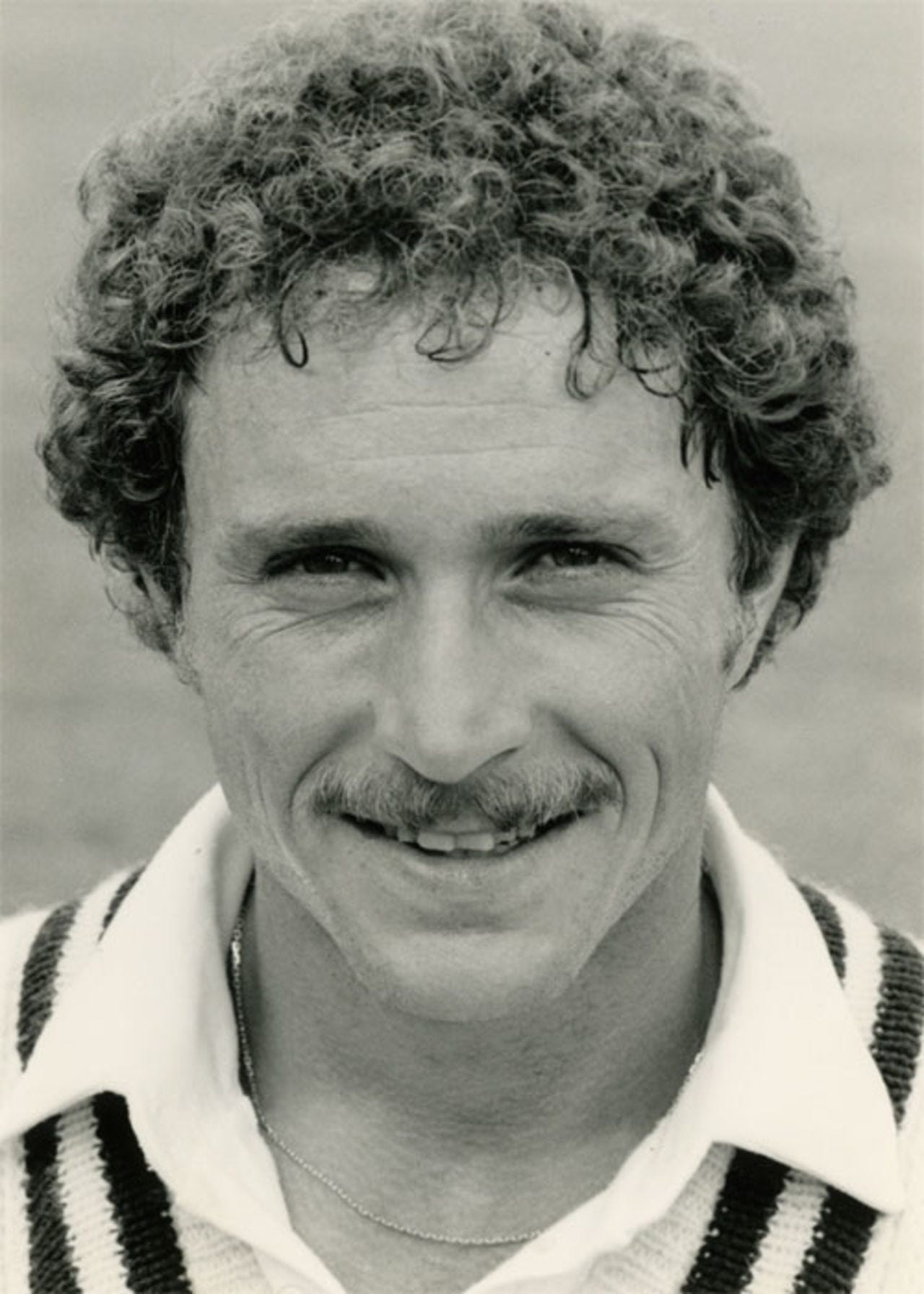
There was no ordinary route for Houghton to reach Test cricket. Since he was born in Bulawayo in 1957, he had been a true all-round sportsman — competent in tennis, squash and field hockey and thus having represented Zimbabwe in sports other than cricket. In fact, he was the goalkeeper for the national hockey team and, it is said, so good that Pakistan’s captain once described him as the best keeper he had ever faced. After leaving school, Houghton joined the police force merely as a means of making a living, and it was only when the circumstances of his job led him towards cricket that it became his career.
Since Zimbabwe spent most of Houghton’s prime years outside the Test arena, playing instead as an Associate nation, he did not achieve his international breakthrough until his mid-thirties, an age at which most Test batsmen are generally considering retirement. Moreover, he was Zimbabwe’s first-choice wicketkeeper for a number of years until a chronic hand injury caused by the constant impact behind the stumps made it necessary for him to pass the gloves to a promising young teammate called Andy Flower.
When Zimbabwe eventually played their first Test match, which was against India in October 1992, Houghton was appointed captain at the age of 35. He then scored a century in the first innings and made 41 not out in the second, forming a match-saving stand with Flower. Thus, he became the only person in history to have scored a hundred on his Test debut while serving as captain in his nation’s first Test match. That was an adequate way to make your entrance.
Two years later, in October 1994, Sri Lanka travelled to Zimbabwe for the first Test series ever played between the two nations. At that point Houghton had passed the captaincy on to Flower and had decided to concentrate entirely on his own batting. The first Test at Harare ended in a draw due to rain and the series then went to the Queens Sports Club in Bulawayo——a ground with its own underdog background. It had been a forgotten old ground which had been used for South African domestic cricket and had had to be almost completely rebuilt in order to host international matches. This would be its first Test.
For the first couple of days the pitch played true, but as the heat increased it started to crack and provided ever more turn as the game progressed—quite the kind of wicket that could reveal a batting side up against a good spin attack. And Sri Lanka had that in abundance. The team’s attack was headed by a young left-arm seamer called Chaminda Vaas and a twenty-two-year-old off-spinner with an unusual, whippy action who was just beginning to attract attention throughout the cricketing world—Muttiah Muralitharan.
Flower won the toss and decided to bat. Vaas made quick progress with the new ball, and Zimbabwe were under pressure from the very beginning. It was then that Houghton came in and simply would not let go of the innings for most of three days.
The true highlight of the innings was the confrontation he had with Muralitharan. Realising that the pitch was going to get worse, Sri Lankan captain Arjuna Ranatunga arranged a defensive off-side trap and had Murali deliver a continuous line outside off stump, spinning the ball sharply in both directions. While most batters would have tried to drive through the off side and taken their opportunities, Houghton did the contrary. He almost completely ruled out the off-side drive, played the ball through the leg side with the back foot, and relied heavily on the sweep shot to disrupt Murali’s rhythm and throw off his fielding placements.
The key moment occurred when Houghton reached 199. Seeing that the off side was occupied and with no straightforward single available, he accurately read Muralitharan’s line and played a reverse sweep into the empty cover area to reach his double century — a shot which, even now, would cause people to raise their eyebrows over its boldness.
He stayed at the crease for 524 minutes — which is about eight hours and three-quarters of actual playing time, extending over nearly eleven hours and three days when the interruptions are taken into account. He faced 433 balls. However, some scorecards suggest he played 541 balls in 675 minutes. By the time he had finished, his score was 266, representing a remarkable 57.58% of Zimbabwe’s total of 462 for 9 declared. There have been very few occasions in the history of Test cricket for a single batsman to have carried so much of his team’s innings by himself.
The Zimbabwe bowlers, headed by Malcolm Jarvis and with Heath Streak, a young player, making good use of the foundation that Houghton had laid, managed to get Sri Lanka out for 218 and thus enforced the follow-on. In their second innings Sri Lanka stayed firm — Sanjeeva Ranatunga remained at the crease to score his own unbeaten century — and because of poor light and rain Zimbabwe were not awarded the victory that their efforts had earned. The match and the series ended in a draw. Yet no one who had seen that Test match left wondering that Zimbabwe were a team capable of playing at this level.
Houghton had no sooner finished with Sri Lanka than he scored another hundred in the third Test at Harare, where he faced a strong spell from Ravindra Pushpakumara, and he ended the series with 466 runs at an average in excess of 155.
The fact that the 266 is so remarkable is not only because it is the highest score achieved by a Zimbabwean, but also because it has remained unaltered throughout what is known as the golden era of Zimbabwean cricket, an era which saw the emergence of truly world-class players. Even Andy Flower, who was mentored by Houghton and who later became the world’s top-ranked Test batsman, never scored more than 232 during his own outstanding career.
Houghton’s Test scores include one further quiet historical fact: in 22 Tests he was never out on a duck, and he ended his career with 1,464 runs at an average of 43.05. He also achieved 1,000 Test runs sooner than any other Zimbabwean.
He retired in 1997 due to problems with his knees, but remained involved with the sport by coaching teams in Zimbabwe, then Derbyshire and Middlesex in England, and also walking from Bulawayo to Harare in 1998 to raise funds for Zimbabwe’s national cricket academy.
The 266 is still the most lasting image of the match: a former police officer and hockey goalkeeper who, batting all by himself for eleven hours, outwitted one of the greatest spinners the game has ever known with a single bold reverse sweep—and in so doing informed the cricketing world that Zimbabwe was here to stay.