
The 13-Hour Wall
How a 22-year-old teetotaler broke Don Bradman and rewrote cricket history

On a sweltering Tuesday afternoon in August 1938, a capacity crowd of 30,000 at Kennington Oval witnessed something that had never happened before, and has never happened since. A young, quiet opening batsman from Yorkshire cut a ball from an Australian spinner to the boundary, took off his cap, and stepped directly into sporting immortality. His name was Len Hutton, and he had just dismantled the most formidable cricketing empire of his era.
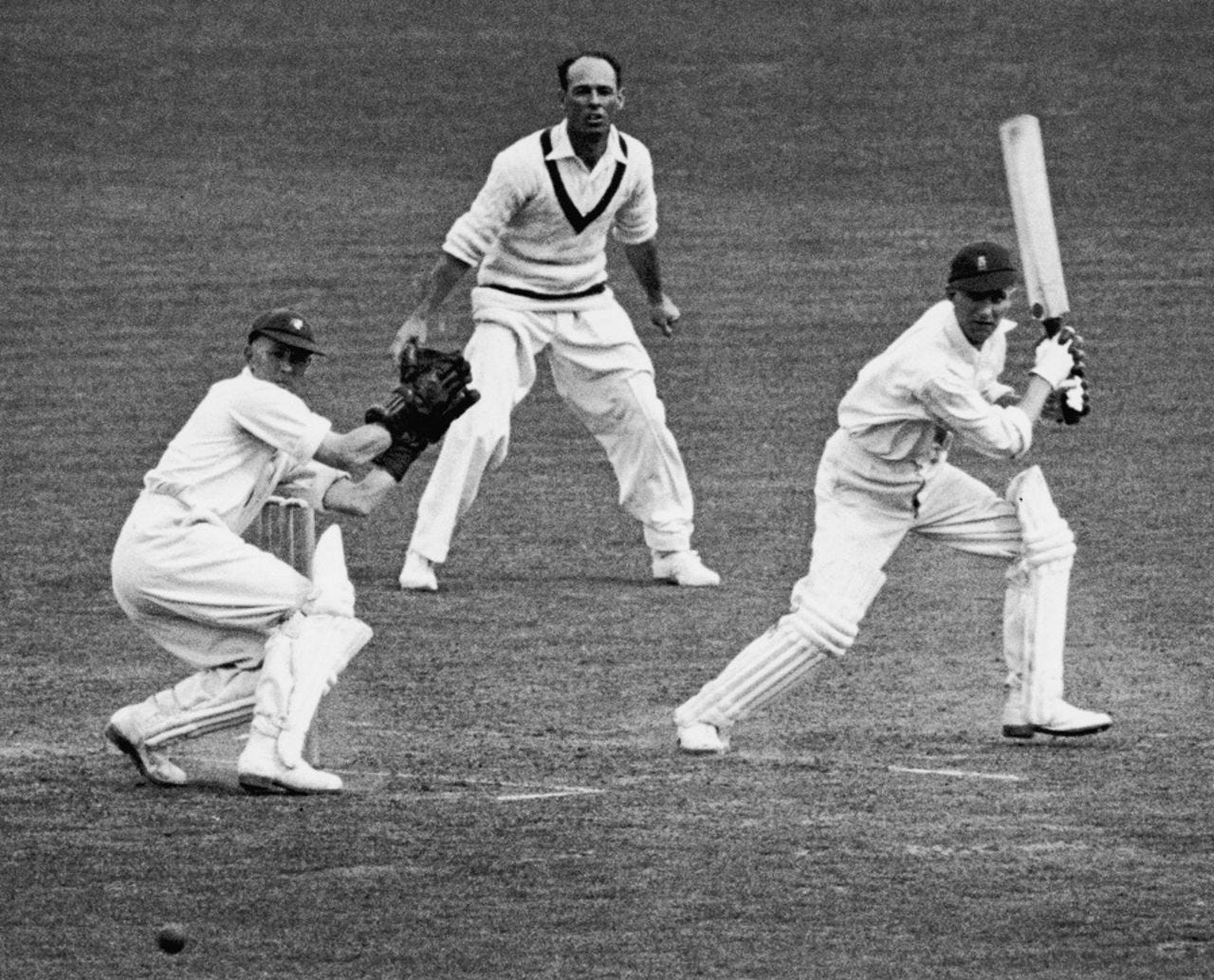
The context of the match was laced with desperation. England was trailing 1-0 in the Ashes series, and the final encounter was designated as a “Timeless Test.” There were no five-day limits, no drawing configurations, and no escape hatches. The two teams were ordered to play until a definitive winner emerged, even if it took a week. For England, the mission was clear: win at all costs and ensure they only had to bat once.
The Clay Highway
The foundation of Hutton’s monumental innings was laid well before a ball was bowled. The Oval groundsman had prepared a surface that would become legendary for its lack of bowling life. The pitch was heavily treated with Nottinghamshire marl—a dense, calcium-carbonate-rich mud—and rolled continuously until it baked into an unbreakable, white clay brick under the London sun. It offered zero seam movement, no natural bounce, and refused to crumble.
When England’s captain, the aristocratic Wally Hammond, won the coin toss, Australia’s fate was effectively sealed. They were condemned to a defensive field day that would stretch across three agonising days. Opening the batting, the 22-year-old Hutton walked out with a clear blueprint: absolute defensive perfection. He played with a perfectly straight bat, punishing loose deliveries but treating the concept of risk as an existential enemy.
The Balcony Reprimand
Hutton’s marathon was not a product of spontaneous flair; it was a gruelling execution of iron-clad team discipline. On Monday afternoon, after having already occupied the crease for roughly eight hours, an exhausted Hutton allowed himself a rare moment of indulgence. He danced down the track and lofted a delivery from left-arm spinner Chuck Fleetwood-Smith cleanly over the mid-on fielder’s head for a boundary.
It was a shot that would have brought modern crowds to their feet. But as Hutton turned back to his crease, he glanced up at the pavilion balcony. There stood his captain, Wally Hammond, glaring down at him with an expression of pure fury. Hammond aggressively gestured for the young opener to keep the ball on the ground. Time was irrelevant; breaking the Australian bowlers physically and mentally was the only objective. Message received, Hutton locked down his technique and did not hit a single ball into the air for the remainder of his innings.
Nightmares and Stout
The chief antagonist confronting England was Bill O’Reilly, a fiercely aggressive leg-spinner widely regarded as one of the greatest to ever play the game. O’Reilly didn’t just bowl; he hunted. He would stomp down the pitch, glaring at batsmen, muttering audible curses after every defensive stroke. By Monday night, having batted through two full days, Hutton’s mind was fracturing under the psychological pressure. Whenever he closed his eyes, he saw O’Reilly running in to bowl at him.
Seeing his young teammate completely unable to sleep, veteran batsman Maurice Leyland offered some old-school Yorkshire medicine. He instructed Hutton—a strict, lifelong teetotaler—to pour a glass of rich port directly into a pint of heavy Guinness stout and drink it down to knock himself unconscious. Desperate for rest, Hutton complied. He later recalled that the concoction barely worked; his anxiety was so profound that he felt he would have needed half a dozen pints to completely erase O’Reilly’s furious visage from his mind.
The One-Pound Pavilion Bet
While Hutton and Leyland (who scored a magnificent 187) forged a massive 382-run partnership, a strange psychological drama unfolded in the quiet English dressing room. The middle-order batsmen, Eddie Paynter and a remarkably young Denis Compton, spent nearly two consecutive days fully padded up, waiting to bat. The sheer exhaustion of sitting in a silent locker room, watching a flawless partnership, takes a unique mental toll on waiting players.
Predicting that the sudden shift from absolute stillness to active batting would paralyse their timing, Paynter turned to Compton on Tuesday morning and made a wager:
“I’ll bet you a pound note that the two of us together don’t manage to score ten runs between us when we finally get out there.”
Paynter’s premonition proved devastatingly accurate. When the wickets finally began to fall on Day 3, Paynter walked out and was promptly dismissed for a duck. Compton followed shortly after, managing a solitary single before being cleaned up by Australian debutant Mervyn Waite. Remarkably, that lone wicket of Denis Compton would be the only Test wicket Waite would ever claim in his entire career.
Chasing the Don
The ultimate target was Don Bradman’s world-record score of 334. Bradman, captaining Australia, knew his record was under siege. He compressed his fielders close to the bat, drying up the singles, forcing Hutton to earn every inch. The tension was suffocating. Sitting on 331, Hutton swung wildly at an O’Reilly delivery and missed it completely, only to hear the umpire call a no-ball. It was his only stroke of luck.
At 2:20 PM, Hutton struck a trademark cover cut off Fleetwood-Smith to the boundary, reaching 335. The crowd flooded the arena, and the Australian players ran over to shake his hand. Among them was Bradman himself. Moments later, tragedy struck the visitors: while bowling in a desperate bid for a breakthrough, Bradman fractured his ankle on the baked pitch. He was carried off the field, unable to bat in either innings, effectively ending Australia’s competitive resistance.
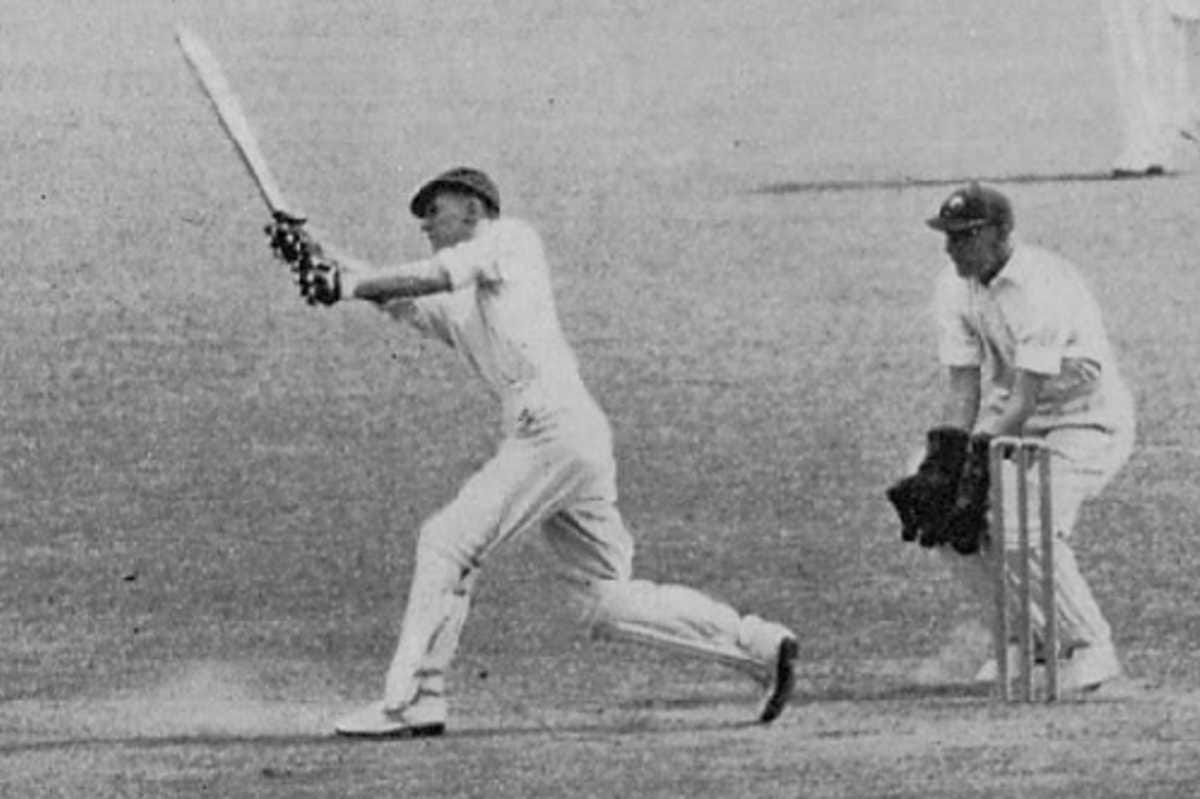
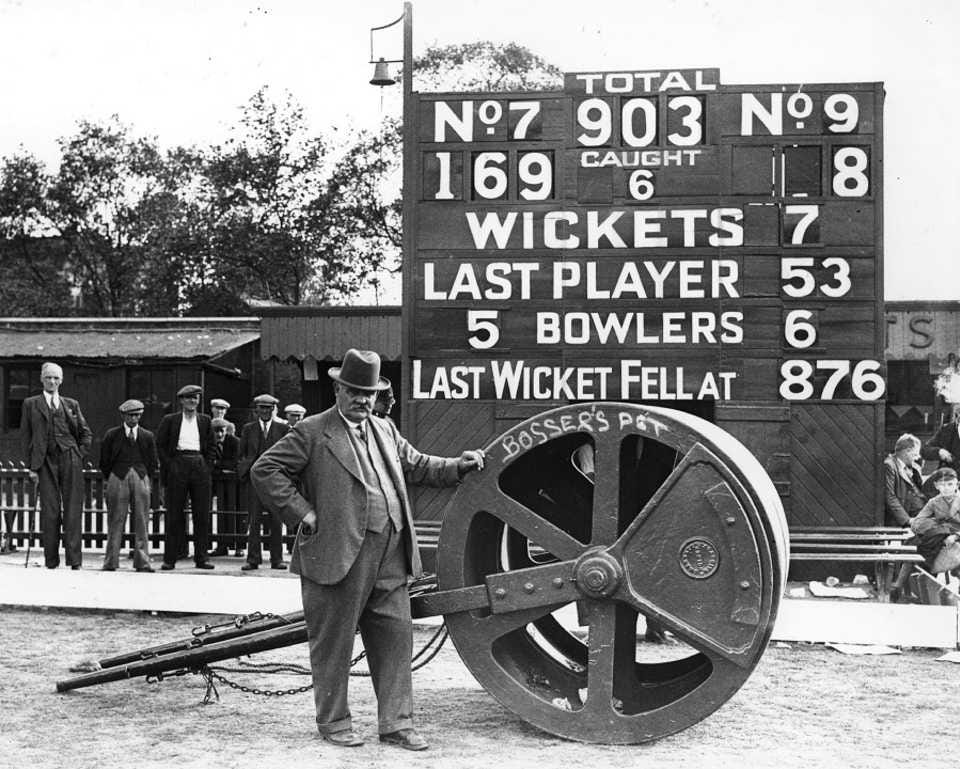
Hutton fought through exhaustion to push the record to 364 before finally top-edging an O’Reilly delivery. He had batted for 13 hours and 17 minutes, facing 847 deliveries without hitting a single six. England declared at an astronomical 903 for 7, routing Australia by an innings and 579 runs—the heaviest defeat in Test history.
An Unbroken Legacy
Though Gary Sobers would eclipse the absolute world record twenty years later with his 365*, Hutton’s achievement remains unique. Eighty-eight years later, it still stands as the only triple century ever scored against Australia in Test history.
The true measure of Hutton’s character, however, emerged after the feat. Just a year later, World War II broke out, and during a military training accident, Hutton suffered a severe fracture to his left forearm that required multiple bone grafts, leaving his primary batting arm nearly two inches shorter than his right. Yet, applying the same stubborn grit he displayed at The Oval, he completely rebuilt his batting technique from scratch, returned to the international arena, and became the first professional captain to lead England to a modern Ashes victory. But to history, Sir Len Hutton remains forever defined by those three days in 1938, when he built an unbreakable wall against cricket’s greatest powerhouse.
Very well written and it was a fun read.